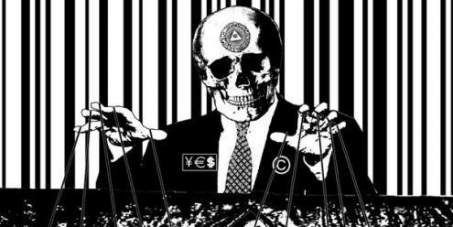
What you are witnessing is not chaos. It only looks that way from a distance. Up close—when you strip away the noise, the headlines, the emotional bait—it begins to feel staged, rehearsed, almost scripted. The violence is real, the deaths are real, the destruction is real… but the narrative surrounding it is manufactured. Carefully arranged. Fed to you in fragments. Adjusted in real time.
As this global performance of terror drags on, the pattern becomes harder to ignore. The same players. The same timing. The same predictable outrage followed by the same predictable silence. The United States, Israel, Iran, the United Kingdom, Europe—names presented as adversaries, yet moving in strange coordination. Even Russia and China, framed as existential enemies, appear at times to operate within the same boundaries of this controlled instability. This does not mean there is no conflict. It means the conflict is managed.
Governments have never hesitated to sacrifice lives when it serves a larger objective. That is not conspiracy—it is history. What has changed is the scale, the precision, and the psychological manipulation surrounding it. Human beings have been reduced to expendable assets, numbers in a system that calculates outcomes long before the first missile is ever launched.
There is an old truth most people sense but refuse to confront: what governments do is rarely spontaneous. It is planned. Layered. Tested. What reaches the public is not reality in its raw form, but a constructed version of it—a psychological operation designed to guide perception. Today, that truth is no longer subtle. It is exposed in plain sight, yet still ignored.
This is not a new phenomenon. Deception has always been the backbone of political power. What is new is the condition of the population. Decades of propaganda, cultural decay, and intellectual erosion have created a society that no longer questions, no longer resists, no longer even recognizes manipulation when it is directly in front of them. Critical thought has been replaced with reaction. Responsibility has been outsourced to authority. And in that vacuum, control expands effortlessly.
Technology has accelerated everything. Artificial intelligence, surveillance systems, algorithmic influence, economic pressure—they form a web so dense that most people cannot see beyond it. The illusion of choice remains, but the outcomes are increasingly predetermined. The State no longer needs to hide its intentions. It operates openly now, confident in the apathy of the population.
And so the narrative unfolds: energy crises, looming global war, economic instability, food shortages. Each presented as organic, unpredictable, unfortunate. But look closer. The so-called oil crises, the carefully escalated conflicts, the synchronized economic disruptions—they follow patterns too precise to be accidental. This is not the eruption of World War III as people imagine it. This is controlled destabilization. Engineered pressure.
Bombs fall, yes. Missiles strike, yes. But not for the reasons you are told. Not for “democracy,” not for “defense,” not for freedom. Those words are props. The real objective lies beneath: restructuring. Consolidation. The slow construction of a technocratic system where control is total and resistance becomes nearly impossible.
Nothing here began yesterday. The seeds were planted long ago. Conflicts in Ukraine, operations in Latin America, the endless “war on drugs,” shifting alliances in the Middle East, financial experiments tied to digital currencies—each piece connected, each step advancing the same direction. Even the appearance of opposition between nations often masks a deeper coordination, where outcomes are known before events unfold.
Power at the highest levels does not operate through randomness. It builds frameworks. Financial systems. Governance structures. Technological infrastructure. By the time the public notices, the architecture is already in place.
And yet many still believe this is all coincidence. That these events simply happen. That leaders react rather than execute. That belief itself is the greatest success of the system. Because once a population accepts the illusion, it stops searching for the mechanism behind it.
The comparison to past crises is unavoidable. The energy shocks of the 1970s. The manipulation of foreign governments. The global response to COVID-19. Each event reshaped society, expanded control, and conditioned the public to accept the next phase. Today’s environment feels different only because it is more advanced, more refined, more absolute.
This is not governance as people once understood it. It is production. A staged reality where political figures, media institutions, and global organizations play defined roles. The objective is not stability—it is transformation. A shift toward a system where currency is programmable, behavior is monitored, movement is restricted, and ownership itself becomes conditional.
Many will protest, claiming they never agreed to any of this. But agreement was never required. Participation in the system—through compliance, through passive acceptance, through the illusion of choice—has already granted it legitimacy. Power does not ask for permission when the population has already surrendered its will.
The deeper issue is not what governments are doing. It is what people refuse to see. Because recognition changes everything. It demands responsibility. It forces action. And that is precisely what has been conditioned out of society.
Until that changes, the process will continue. Faster now. Less hidden. More aggressive.
Do nothing, and the consequences will not arrive gradually—they will compound. Food prices will surge beyond reach. Shortages will become routine. Energy will be restricted, rationed, weaponized. Surveillance will move from the background into every aspect of daily life. Travel will tighten. Movement will narrow. Choices will disappear one by one.
This is how control solidifies—not in a single moment, but in a series of accepted steps.
And by the time most people realize what has been built around them, it will no longer feel like a system they can leave. It will feel like the only system that exists.
At that point, resistance is no longer a question of comfort. It becomes a question of survival.
 Armageddon News blog
Leave a comment