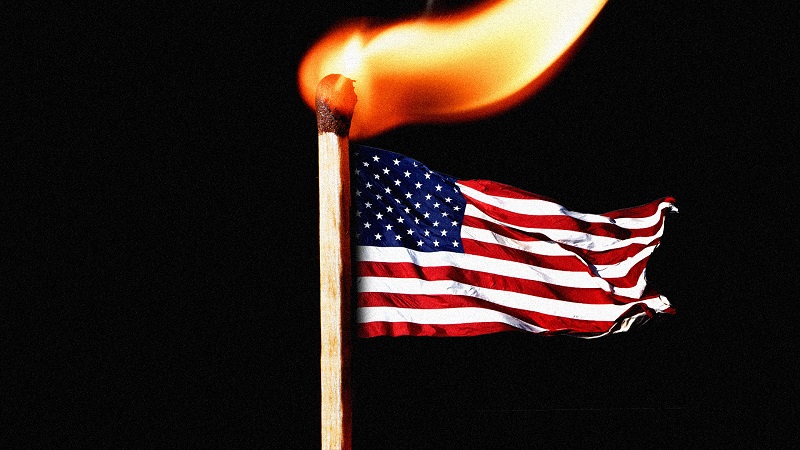
Americans aren’t keeping up anymore. That’s the lie we tell ourselves.
They’re not informed—they’re overwhelmed, saturated, pushed under. Drowned in a constant surge of headlines that don’t stop long enough to be understood. One outrage replaces another before the first one even settles. You reach for clarity and instead you get noise—louder, sharper, more emotional each time.
One day it’s the Epstein files again—dragged out, fought over, reshaped depending on who’s speaking. The next, it’s a disappearance. A mother. A face on a screen. A tragedy that feels real for a moment… then fades as the next wave crashes in. Real pain, real loss—but stacked, layered, buried almost immediately.
And it keeps happening.
Thousands go missing every year in America. Not theory. Not speculation. Reality. Some come back. Some are found in ways no family should ever have to endure. Some… simply vanish. No answers. No closure. Just absence. And still, the same words echo every time—“this doesn’t happen here.”
But it does. It always has.
Then the narrative shifts again. Iran. Oil routes. The Strait of Hormuz. Political ads that don’t even try to hide the lies anymore—just louder distortions, repeated until they sound like truth. Candidates competing not on facts, but on who can bend reality more effectively. And the public… watches. Scrolls. Reacts for a moment.
Then forgets.
Always forgets.
The Epstein “suicide” never really disappeared. It just sank beneath the surface, like something rotten that no one wants to smell anymore. That network, whatever it truly was, didn’t dissolve—it dispersed. Rebranded. Protected. And every time it resurfaces, it’s weaponized. Not to reveal truth, but to shape perception. To accuse, deflect, redirect.
Truth isn’t the objective. Control is.
And buried under all of it—under the noise, the outrage, the endless churn—are details that don’t fit cleanly into any narrative. So they’re ignored.
Trump removed Epstein from Mar-a-Lago after witnessing inappropriate behavior. That happened. It’s documented. But it complicates the storyline, so it disappears into the background. Trump reportedly cooperated with investigators in the early 2000s. That too doesn’t align neatly, so it fades—while louder, simpler accusations dominate the stage.
Because complexity is dangerous. It forces people to think.
And thinking… breaks control.
But Epstein isn’t the origin of this pattern. He’s not even close.
He’s just one chapter in a much older story.
Long before social media, before the internet turned attention into currency, there were other moments—events that should have stopped the country cold. Forced questions that never received real answers.
KAL Flight 007.
A passenger jet. 269 souls. Gone.
The official version is clean. Too clean. Shot down by the Soviets. Tragic. Case closed.
Except… where were the bodies? The luggage? The debris that tells a human story?
There was almost nothing.
That alone should have ignited something in the public. Questions. Pressure. Refusal to accept a narrative that arrived too quickly, too neatly. Instead, the story hardened almost overnight. Early confusion vanished. Contradictions were smoothed out. Certainty replaced doubt with unnatural speed.
And people accepted it.
But step back for a moment. Think. A plane disappears, and within days the explanation becomes untouchable. Final. A president reacts publicly while information is still being described as “reported,” as if the full picture wasn’t already known behind closed doors.
Does that feel organic?
Or does it feel… managed?
There were early reports—messy, unfiltered—that suggested something else entirely. That the plane had landed. That passengers might still be alive. That negotiations were possible. These weren’t whispers from the fringe. They were part of the initial chaos before the narrative snapped into place.
And then—silence.
A clean ending replaced something far more complicated.
Decades pass. Families are left with questions that never age, never soften. They wait. They ask. And they are met with nothing.
Because once a story is sealed—once it becomes history—it’s no longer meant to be questioned.
Then came TWA Flight 800.
An explosion. A fire in the sky. 230 people gone.
At first, the word was terrorism. Urgent. Immediate. Then, just as quickly, the explanation shifted—mechanical failure. A fuel tank. Case closed.
Except it wasn’t closed. Not really.
Witnesses described things that didn’t match the official findings. Investigators who stepped outside the boundaries of the accepted narrative found inconsistencies—threads that were never followed to their end. And those voices didn’t spark debate.
They were pushed aside.
That’s how it works.
The system doesn’t always fight dissent head-on. It discredits it. Labels it. Waits. Time does the rest. Memory fades. Urgency dissolves. The public moves on—not because the questions were answered, but because they were trained not to keep asking.
Time is the quiet weapon.
Wait long enough, and outrage dies. Witnesses disappear. Evidence becomes harder to trace. People grow tired. And eventually… they stop caring.
That’s the shift. That’s the real danger.
Not that institutions lie—history has proven that again and again—but that people begin to expect it. Accept it. Live with it as if it’s just part of the structure of reality.
KAL 007.
TWA 800.
Oklahoma City.
9/11.
Different moments. Same rhythm.
Shock. Confusion. Competing explanations. Then—closure. Official closure. The kind that sounds complete but feels hollow if you sit with it too long.
And now… here we are again.
New distractions. New crises. Fresh reasons not to look backward.
But the question hasn’t changed. It’s still there, waiting—uncomfortable, unavoidable.
Are we still a nation that demands truth?
Or have we become something else entirely—quieter, more passive, more willing to accept whatever version of reality is handed down, as long as it comes wrapped in confidence?
Because truth doesn’t disappear all at once. It’s not erased in a single moment.
It’s buried slowly.
Layer by layer. Story by story. Until what remains isn’t truth—but something that resembles it just enough to pass.
And once that version takes hold… it becomes almost impossible to remove.
So maybe the real question isn’t what happened in those events. Not anymore.
The real question is why we let go of them so easily.
Why we were taught—conditioned—to move on before understanding, to accept before questioning, to forget before demanding.
Because a population that forgets its unanswered tragedies becomes something else entirely. Something easier to guide. Easier to shape. Easier to convince that everything is under control… even when it clearly isn’t.
And if that realization doesn’t sit heavy—if it doesn’t disturb something deep in you—then the process is already complete.
Because the final stage of any long deception isn’t chaos.
It isn’t confusion.
It’s acceptance.
And once a nation reaches that point… it doesn’t just lose the truth.
It loses the ability to recognize it at all.
 Armageddon News blog
Leave a comment